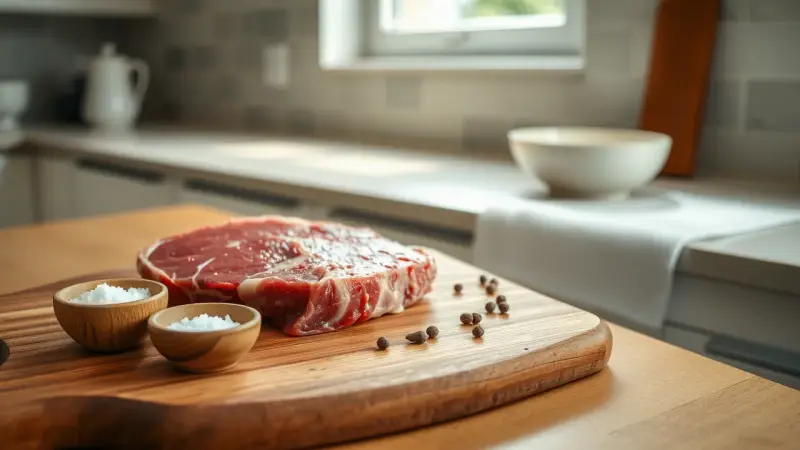
On 26 October 2015, the International Agency for Research on Cancer (IARC), the cancer agency of the World Health Organization, announced that it had classified processed meat as carcinogenic to humans and red meat as probably carcinogenic to humans. The announcement set off a wave of “foods to avoid” lists across Asia.
One of them, attributed to the Cancer Hospital of the Chinese Academy of Medical Sciences, named ten everyday foods. Eleven years on, it helps to separate what the WHO evaluation established from what such lists claimed.
What the WHO actually found
A Working Group of 22 experts from 10 countries classified red meat as probably carcinogenic to humans (Group 2A), based on limited evidence in humans and strong mechanistic evidence. Processed meat was classified as carcinogenic to humans (Group 1), based on sufficient evidence that it causes colorectal cancer.
The two meats are defined differently. Processed meat is meat transformed through salting, curing, fermentation, smoking or other processes. Red meat is unprocessed mammalian muscle meat such as beef, veal, pork, lamb, mutton, horse and goat. The conclusions rested on a review of more than 800 studies.
The group’s headline figure was that each 50 gram portion of processed meat eaten daily increases the risk of colorectal cancer by 18%. The classification describes how sure scientists are of a link, not how strong the link is. A Cleveland Clinic specialist notes that hot dogs are not as dangerous as cigarettes; the two simply share a confirmed link to cancer.
The WHO’s own explainer, which remains online, adds that the strongest evidence links red meat to colorectal cancer, although the evidence is still limited. There is also some evidence of links to pancreatic and prostate cancers.
The 2015 list of ten
The hospital’s list named the following foods, each with a reason given in 2015:
- Sunflower seeds, because the plants can take up heavy metals from contaminated soil.
- Chewing gum, because of additives such as aspartame and titanium dioxide.
- Monosodium glutamate (MSG), the common flavour enhancer.
- Pork liver, because of its very high cholesterol.
- Glass noodles and rice noodles, because of alum used as an additive.
- Pickled vegetables, linked by the list to stomach cancer.
- Bottled juice, because of its high sugar content.
- Preserved eggs, because of lead used in some processing.
- Fermented tofu, because fermentation is vulnerable to microbial contamination.
- Youtiao, the deep-fried bread sticks, linked by the list to prostate cancer.
That list was a hospital’s advice, not a WHO classification. The IARC evaluation covered only red and processed meat, so it did not rate any of these ten foods. Several entries, such as the MSG one, gave only a general reason, and the sugar and cholesterol points concern general health rather than a proven cancer link.
Reading food-and-cancer headlines
The processed meat finding is the part of the 2015 discussion that has a clear institutional basis. It is the reason bacon, ham, sausages and cured meats are the foods most often named in cancer-prevention guidance.
The American Institute for Cancer Research, which welcomed the WHO report in 2015, recommends avoiding processed meats and eating no more than 18 ounces of cooked red meat weekly to lower colorectal cancer risk. It also says moderate red meat consumption is not associated with a notable increase in colorectal cancer risk.
France’s food safety agency ANSES made a related point in 2015: the risks of a particular food must be weighed against the benefits it can provide, including its nutritional value.
For the other foods on the 2015 list, no comparable WHO ruling accompanied them. Anyone with questions about their own diet and cancer risk can raise them with a doctor or dietitian.