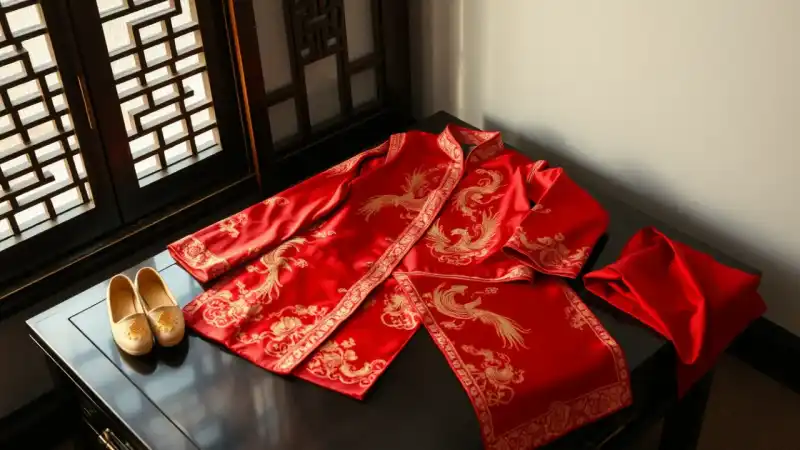
The Chinese wedding kua is a two-piece bridal outfit. The jacket, called the kua (褂), is worn over a skirt, the qun (裙). The pair together is known as the qun kua (裙褂), and it is usually red and heavily embroidered. Three things help explain why brides still choose it: how it is made, what its motifs mean, and the superstitions around trying it on.
1. What the garment is
The qun kua is a jacket-and-skirt set, commonly in red. Historically it was made of silk, while some modern versions use acetate satin to hold the red lustre over time. It is covered in gold and coloured thread embroidery, with motifs that stand for blessings on the couple.
Two main cuts are described. The Dragon Phoenix Kua (龍鳳褂) has a zipped, looser jacket and a straight skirt, and it was historically worn by first wives. The Xiao Fengxian Kua (小鳳仙) has a more tapered waist and an A-line skirt, and it was historically associated with concubines. Those distinctions are far less strict today.
The garment is especially associated with Cantonese communities, and with Chinese families in Malaysia whose roots lie in the Lingnan region. In the early 20th century, emigration to Hong Kong raised the number of embroiderers there, which helped spread the style.
2. Where the dragon and phoenix come from
The best-known origin story is set in the Qing dynasty. An emperor is said to have gifted an official’s daughter a wedding outfit embroidered with dragons and phoenixes. The gift was a great honour, and the style spread from Guangdong to other parts of the empire. It remains a legend, and accounts of the details vary.
Other accounts trace the dragon-phoenix style to the Ming dynasty. They add that these motifs were once reserved for the royal family before they passed into wider use. Whichever account is followed, the point is the same. Imagery once tied to imperial power became a wedding blessing for ordinary couples.
The pairing carries a clear meaning. The dragon stands for the masculine and the phoenix for feminine beauty, and together they represent a harmonious union, the yin and yang. Other common motifs include:
- peonies, for prosperity and wealth;
- mandarin ducks, for fidelity;
- five bats, for longevity, wealth, health, virtue and love;
- clouds, for harmony.
The amount of embroidery has traditionally been read as a sign of a family’s means. Colour has changed too. In the past, the top could be black with a red skirt, whereas today both pieces are typically bright red.
3. The customs around trying it on
Superstition shapes how a bride handles the garment. When fitting a qun kua, she is told to try the jacket and skirt separately and never to put both on at once. The complete set is worn together only on the wedding day, to signify that she will marry only once.
That belief explains why fittings can feel unusual compared with those for a white gown. It also shows how closely the garment is tied to family expectations about luck.
How it is worn now
White gowns have become the first choice for many brides. The dragon and phoenix gown still holds a place at Chinese weddings, most often for the tea ceremony, the fetching of the bride, or the banquet.
The craft varies widely. Some of the most densely embroidered kua are described as made entirely by hand, with a few taking well over a year to complete. Designers also work with colours, cuts and fabrics while keeping the symbolic motifs, so modern versions can sit somewhere between the heirloom and the contemporary. Accounts vary on exact production times and thread density, so those figures are best treated as approximate.