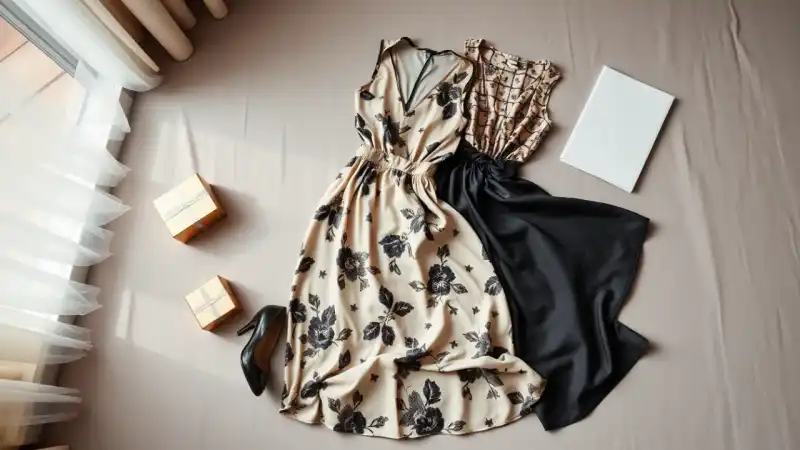
At 9am on 17 February, Topshop released a capsule by Greek designer Mary Katrantzou. It was her third collection for the high-street chain. Prices started at £40 and rose to £350 for a structured dress. Her own ready-to-wear dresses were retailing at around £900.
The capsule showed how Topshop approached designer partnerships. It paired young designers who had been backed through NewGen with a mass-market audience.
The capsule itself
The range took its cue from Katrantzou’s oriental-inspired autumn/winter 2011 collection. It featured bold floral prints and regal architecture, building a fantasy world on each garment. Her trademark was the digital print, and the label has since been described as known for digital prints and embellishments used to create feminine pieces.
In New York, the collection was sold at Topshop’s Broadway store. Time Out described nine pieces carrying her collaged graphics, among them floral-printed leggings at $80, sleeveless blouses at $160 and tunic dresses at $310. The magazine likened them to wearable spring bouquets.
Where NewGen came in
NewGen is a scheme run by the British Fashion Council. It was set up in 1993 to spot and support fledgling designers as they get their careers off the ground. Past recipients include Alexander McQueen, Erdem, Peter Pilotto and Mary Katrantzou.
Topshop was closely tied to the scheme. In 2003 it became a headline sponsor of the British Fashion Council. It supported NewGen and the talent incubator Fashion East, and set up a seasonal runway space during London Fashion Week to back young talent. The NewGen programme, sponsored by Topshop, gave these designers a platform to show during London Fashion Week.
Katrantzou fits that pipeline. Her first ready-to-wear collection was for Autumn/Winter 2009, and it debuted at London Fashion Week in February 2009. She received NewGen sponsorship from the British Fashion Council for six seasons, from Spring/Summer 2009 to Autumn/Winter 2011.
A new kind of high-street deal
Topshop’s designer line-up grew from there. In 2003 it began developing exclusive collaborations with emerging designers. The chief names were Christopher Kane, Mary Katrantzou, Jonathan Saunders, Meadham Kirchhoff and JW Anderson, and later Michael Halpern. Marie Claire notes that it wasn’t commonplace for a designer to collaborate with a high-street brand at the time.
The strategy also travelled. Topshop opened a flagship on Broadway in Manhattan in 2009. Kate Moss and Sir Philip Green opened the doors to crowds and queues of fans. That store was the New York outlet where the Katrantzou pieces were later on sale.
The approach was often set against that of H&M, which was also known for designer partnerships. One fashion commentator argued that H&M’s collaborations tapped into established fashion brands and designers. By contrast, Topshop empowered a generation of designers who made the British fashion scene of the 2000s and 2010s.
What Katrantzou did next
The Topshop capsule was one of several brand partnerships in Katrantzou’s career. In April 2014, she announced she would work with Adidas for the foreseeable future, on both clothing and footwear. In October 2014, Vogue unveiled the collaboration between Adidas Originals and Katrantzou. It drew on track shoes worn by medallists in the 1970s and 1980s.
Her own website’s projects page lists a long run of partners. Among them are Moncler, Bvlgari, Victoria’s Secret, Villeroy & Boch, The Rug Company and Lipsy. Mary Katrantzou for Topshop is on that list as well.
In October 2017, Katrantzou sold a minority stake in her business to Yu Capital, the investment arm of Hong Kong-based Yu Holdings. In 2018 she marked the label’s tenth anniversary at London Fashion Week.