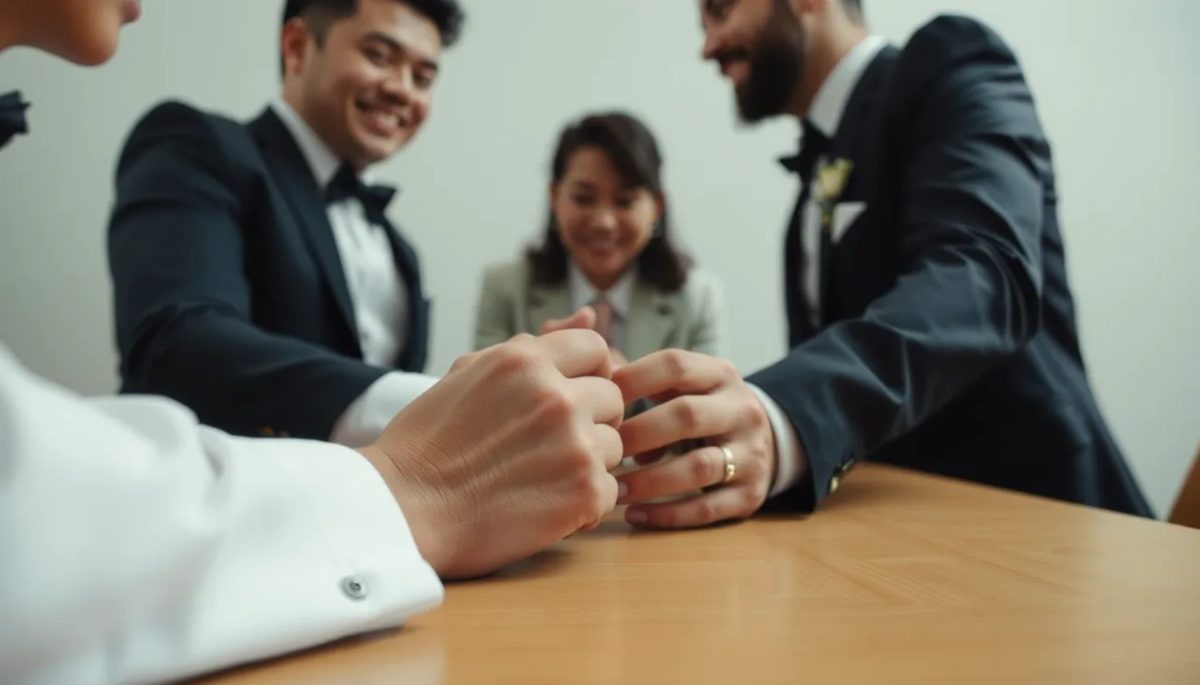
Before a Singapore groom can see his bride on the wedding morning, he and his groomsmen often face a row of bridesmaids and a list of forfeits. One groom who married in November 2012 arrived at his bride’s home at 8am with five groomsmen. They ate seaweed smeared with wasabi from one another’s mouths, then chillies, then concentrated orange cordial. They also did push-ups with snacks in their mouths. He handed over about S$300 in hongbao before the door to her room opened.
The custom is known locally as the gatecrash. It is usually described as a test of the groom’s resolve and determination to win his bride. Whether it deserves its status as a tradition is a question that Singapore couples and commentators have argued about for years.
The case for keeping it
Several grooms in 2013 defended the games, some with real enthusiasm. The groom who ate the wasabi seaweed had slept badly the night before, worried above all about having to sing. Even so, he said the challenges were manageable and that couples should simply go through with them because it is the custom. He described a sense of relief when the door finally opened.
Another groom, who married around 2010, put a live mealworm in his mouth. He also ate pungent fermented beanpaste and danced at his wife’s void deck with white underwear worn over his trousers, Superman-style. Looking back, he called it fun and said the couple enjoyed watching the wedding video. A third groom, who married in 2012, faced durian, a food he hated, and used lipstick-covered lips to write “double happiness” in Chinese characters. His bride watched on a live video feed from her room. He said it mattered to go through what everyone else goes through, while she found it fun to watch.
Public figures who played along
Two media personalities also described their own gatecrashes in 2013. Actor-host Ben Yeo, who married in 2006, wore adult diapers over his trousers, put a pacifier in his mouth and had his leg hair waxed. He called the waxing the worst part. He still thought the tradition added spice to the day, and suggested the bride should try storming the gate instead.
Capital 95.8FM presenter Pan Jia Biao, who married in 2010, drove to Malaysia to fetch his wife from her family’s kampung. There he recited Chinese tongue-twisters with grapes in his mouth, fetched well water with a small plastic bottle, scrubbed handkerchiefs on a washing board and performed a song and dance. He and his wife first wondered if they were too old for it in their 30s. They went ahead because a wedding happens once in a lifetime.
The case for questioning it
Not every groom was convinced. One groomsman who had served at five weddings, often dancing in mildly suggestive routines, called the stunts “meaningless sabotage”. When he married about two years before 2013, he and his wife set ground rules, with nothing sexual. He ended up solving a puzzle and drinking bitter tea. He called the games redundant but a contributor to the atmosphere, and said that something more meaningful, such as lighting a candle for blessings, would be better.
The history of the custom adds to the doubt. A February 2020 feature in RICE found that Singapore Chinese weddings before the 2000s more typically involved exchanging symbolic items at the bride’s house. It concluded that the gatecrash is more a modern local phenomenon than an ancient tradition. It also noted that the word “gatecrashing” did not mean wedding games in Singapore newspapers until 2016. The origin remains unsettled. One NUS sociologist told a newspaper in 2016 that the games were created by English-educated, middle-class young people, though he could not point to further sources. A master’s thesis theorises a link to Cantonese bribe-the-groom customs.
Where the debate stands
The Singapore debate has been about taste and meaning rather than rules. Elsewhere it has turned into regulation. China has a much older custom of guests teasing newlyweds, called naohun, which dates back to the Han dynasty. It has drawn official action after incidents of humiliation and harassment. In 2021 the city of Zouping in Shandong issued a notice banning “vulgar behaviour at weddings”. The notice said offenders could be punished by police, and urged people to turn naohun into “civilised blessings”. VICE reported that younger urban Chinese increasingly regard such games as distasteful, although the practice stays popular in some regions, especially rural ones.
Singapore’s grooms mostly sit between the two positions. They accept the wasabi and the push-ups as a rite of passage, but many want limits. The ground rules set by the bride and groom before the day, and the freedom to skip the games, are what the 2013 interviewees kept returning to. None of them wanted the games gone altogether.