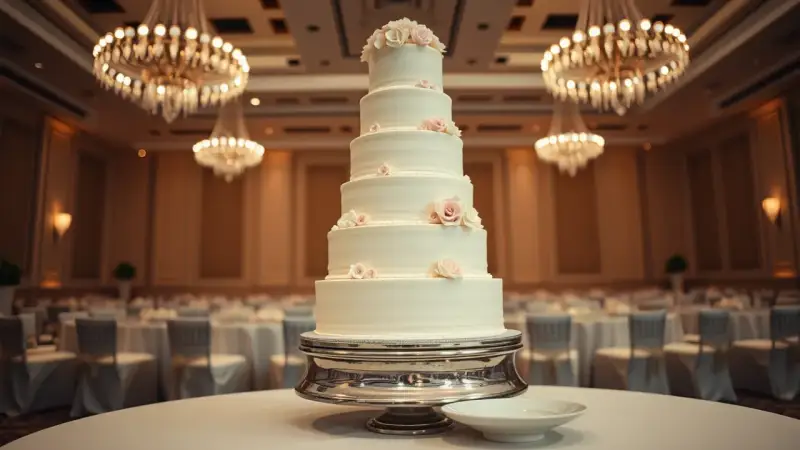
In Singapore ballrooms, the cake on stage is often not a cake at all. A dummy cake is built from styrofoam tiers iced to look real, usually with one small real wedge slotted in so the couple have something genuine to slice for the photo.
Many hotel and banquet packages supply one for the cake-cutting moment, and guests never eat it. Yet an argument made in the 2014 to 2015 wedding season still stands: if the ritual is about sharing something real, why cut a prop?
What the cake was meant to mean
Depending on which version of the story you believe, wedding cakes trace back to ancient Rome, where bread was broken over the bride’s head for luck. Another version has English couples who managed to kiss over a towering confection being promised a prosperous marriage.
Either way, the cake became a centrepiece in its own right, and cutting it became a symbolic gesture. Cutting it together is a more civilised cousin of that Roman bread-breaking, and the feeding of the first slice to one another has long been read as a promise to provide for each other.
The case for the real thing
The original argument rested on four points, each still worth weighing.
- It can double as dessert. Unless the menu is a Chinese banquet that already ends with yam paste or mango sago, a platter of extra cakes or cupcakes duplicates what a real wedding cake could serve.
- It is a tradition most people can enjoy. Even couples who skip other customs often keep this one, and cake tastings are a pleasant part of the planning.
- It gives you an anniversary tier. Some hotels offer a replacement cake on the first anniversary. Carefully preserving a tier from the actual day is a different thing, because it lets a couple revisit the very cake they cut and marks the year travelled since.
- It carries the luck. In the old lore, guests who share the cake take part in the couple’s good fortune, and a couple who eat their cake a year later are said to enjoy blessings and luck.
The cake pictured with the original piece, a salted caramel red velvet and speculoos creation from The Butter Studio, showed how far a real cake can go on flavour. That is something polystyrene cannot do.
Why many couples still choose a dummy
The other side is practical. A fully edible five-tier cake is expensive, and few rooms would finish it. Couples who want the height and drama in photos often top a dummy base with a single real tier, cut into that, and skip the cost of feeding the whole room from the display.
Venues point out that if guests are meant to eat cake, a dessert table or sheet cakes cut in the kitchen usually cost less per serving than a towering tiered cake. Many ballroom weddings in Singapore still follow that pattern: a mock cake on stage while the real dessert is served separately or arrives as a plated course from the venue.
Dummy tiers also remove some risk. A foam tier holds its shape through a long programme under stage lights, and cutting a single real layer avoids the worry of a collapsing slice in front of a full hall. Dummy tiers are a common choice in the UK and elsewhere too, so the trend is not unique to Singapore.
Where it stands now
As of October 2026, the question is less about right or wrong and more about what the cake is for. Local wedding guides distinguish between a cake for the ceremony photo, a dessert table guests will actually eat, and servings for the whole room. Each leads to a different cake and a different budget.
Real cakes tend to turn up more often at smaller, more personal celebrations, such as restaurant lunches and intimate solemnisations, where the couple can serve every guest a slice. For big ballroom dinners, the mock cake remains the default.
The argument for a real cake remains the one made in 2014: if you cut it, kiss over it and keep a piece for your first anniversary, the tradition works best when the cake is genuine, even if only one tier is.