
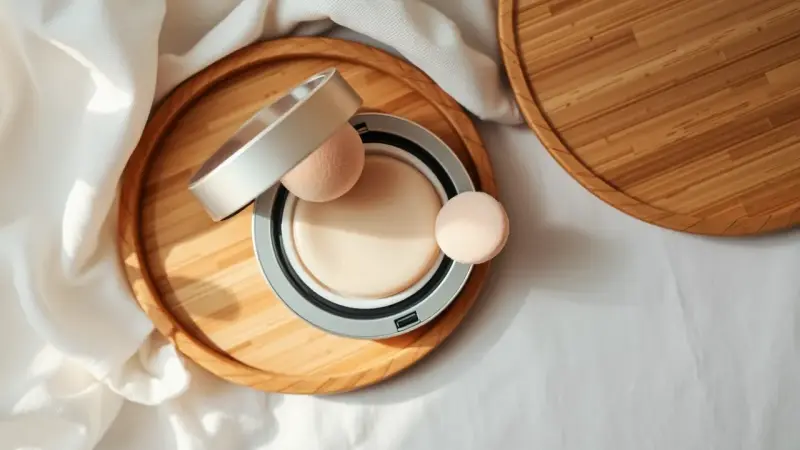
Back in January 2015, makeup artist Larry Yeo said a cushion foundation gives you more control when you apply it. He also said it is easy to pick up too much product on the puff. That is still the main problem with the format. A typical cushion is liquid foundation soaked into a sponge and kept in a compact with a puff. It gives a lighter, more watery layer than most bottled foundations, with a dewy finish.
How much foundation should go on the puff?
Less than you think. In 2015, Chaven Lee, a field trainer for the Korean brand Sulwhasoo, said to slide your index, middle and ring fingers under the puff’s ribbon. Then soak just the centre of the puff, without pressing hard enough to flood it. Current advice is the same: press the puff gently onto the cushion, just once or twice. A fresh compact may release more foundation than you expect. If you pick up too much, press the excess off on the back of the plastic cover that seals the cushion. Then twist the cushion puff on the surface of the cushion to evenly distribute the product.
Should you swipe or tap?
Advice on this has changed. In 2015, Yeo suggested swiping the puff across the skin first to spread the foundation, then dabbing to blend it. More recent guides recommend pressing and tapping only. Dragging or rubbing the puff across your complexion can break up an even layer. One common method is to dot the product onto the center of the face (cheeks, forehead, nose, chin) and then tap outwards. For a little more coverage, tap a second thin layer onto just the areas that need it. Under the eyes and around the nose, Laneige trainer Tina Oh suggested in 2015 folding the puff in half and dabbing gently.
Do concealer and powder go before or after?
After. In 2015, makeup artist Clarence Lee said concealer should go on after moist bases such as liquid, cream or cushion foundations. Putting concealer under a cushion can leave the skin looking patchy. Current tutorials agree: apply the thin cushion layer first, then conceal what still shows. Powder is optional. Chaven Lee suggested a light dusting of loose powder for a more matte finish, or brushing it along the hairline and the sides of the nose to soak up oil. Keep it light, because heavy powder over your entire face can instantly dull the luminous, skin-like effect. A setting spray is another option.
How can you make a cushion last longer, and keep it clean?
In 2015, Clarence Lee suggested tapping your fingers on the cushion and pressing the foundation onto your skin with them. He then used the puff to blend and a foundation brush for tricky spots. Yeo preferred an angled kabuki brush at home, because it picks up less product, and saved the puff for touch-ups when out. Foundation also sinks to the bottom of the sponge with daily pressing. When it runs low, Chaven Lee recommended flipping the sponge over with clean tweezers. Flipping the cushion over to use the foundation that has sunk underneath is still standard advice.
Hygiene is the trade-off. In 2015, Clarence Lee pointed out that liquid foundation is usually poured or pumped out, so you barely touch it. A cushion is handled every day, which can transfer oil, dirt and bacteria into it. Newer compacts come in two types: a classic foam sponge, which gives a light, dewy layer but makes it easier to overload, and a mesh cushion, where you press through a fine net to release a set amount. Yeo also compared other bases in 2015. Compact foundations dry to a semi-matte or matte finish that can show fine lines and look chalky under flash. Cream foundations cover more but can look heavy.