
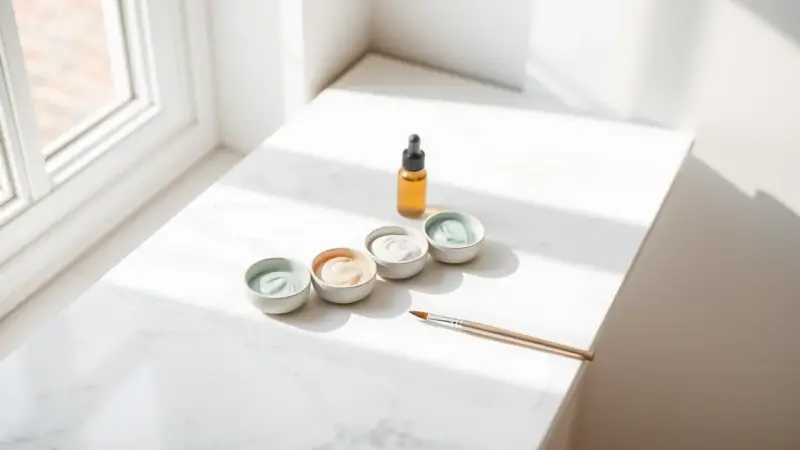
Colour correcting is based on the colour wheel. A shade cancels out the colour opposite it. Green cancels red, peach or salmon cancels blue and purple, lavender cancels yellow, and yellow cancels purple. On medium and light-to-tan Asian skin, the trick is to pick the right corrector for the right problem and use only a little.
Colour correctors are concealers or primers with a coloured tint, usually green, peach, yellow or lavender. They come as creams, primers and liquid concealers. A corrector is not the same as concealer. A corrector cancels out an undertone, while concealer covers with a shade that matches your skin.
The method, step by step
Apply corrector before concealer and foundation, never after. Below are the three main concerns for Asian skin tones and the shade that suits each.
1. Dark under-eye circles
Dark circles don’t all look the same. Some lean blue and some lean purple, so look closely before you choose. Peach or salmon cancels blue and purple circles, and yellow works on purple. On medium skin, a deeper salmon or orange-peach gives enough pigment to cancel the darkness. Light peach shades suit lighter skin.
To apply, draw a small triangle of corrector under the eye with a concealer brush and blend it out. You can also dab on a little with a wand and press it in with a fingertip. Don’t use a pale concealer alone over purple circles: it can make the area look grey. Correct the colour first, then put concealer on top.
2. Sallow or dull skin
Sallow skin looks yellowish and a little tired, which can make you look unwell. On the colour wheel, purple sits opposite yellow, so lavender correctors and primers even out sallowness and brighten dull skin. Use purple where you want brightness, such as the cheeks, forehead or chin. A tinted primer can cover the whole face before foundation.
3. Acne, red spots and all-over redness
Green sits opposite red on the colour wheel, so a green concealer or primer tones down red pimples and blotchy patches. Tap a little onto each spot and blend only the edges. If you blend from the centre, a darker spot won’t stay covered. If your skin is textured, gently exfoliate before makeup, use a thin layer of green, then add concealer.
Green primers suit you if you’re prone to redness across the face, as with rosacea or broken capillaries. One example is Clarins SOS Color Correcting + Hydrating Face Primer, a green primer made to tone down redness while prepping the skin.
Tips and variations
- Less is more. Apply thin layers and build coverage slowly. Heavy layers leave a green or peach cast instead of an even tone.
- Match the strength to your skin depth. The shade family stays the same, but medium skin needs more pigment than fair skin. Light peach can look ashy on deep skin, where a rich orange or red-orange works better.
- Try yellow if peach doesn’t work under your eyes. Depending on skin tone, yellow can cover under-eye circles better than peach. It also masks shadows under the cheekbones and chin.
- Orange is for brown and grey. Orange cancels dark brown and greyish tones, such as dark marks and melasma with blue or purple undertones.
- Treat only the problem areas. Use corrector on redness, dark circles or melasma rather than your whole face, unless you’re using an all-over tinted primer.
Products come in several forms. Multi-shade palettes put green, yellow, peach and lavender in one compact. Single sticks make it easy to target one spot. Some correctors include skincare ingredients: Kosas Revealer Extra Bright Serum-Powered Color Correctors for Dark Circles contain caffeine and peptides.
Some older beauty hacks used red lipstick to hide tattoos or very dark circles. Red is much stronger than the peach and salmon shades suited to light and medium skin. Rich red-toned correctors suit deep skin tones.
The corrector step won’t look finished on its own. It only cancels out the discolouration, so concealer or foundation always goes on afterwards to even out your skin tone.