
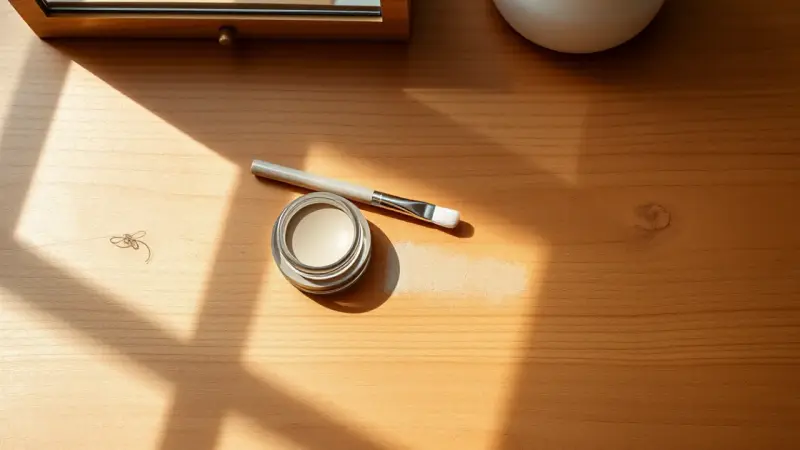
Powder pressed into little pans used to be what most people meant by eyeshadow. On professional makeup shoots and makeovers in the past, makeup artists often reached for cream eyeshadow sticks and pots instead. Most used them as a base for powder, but cream shadow can also make a complete eye makeup look on its own.
For a beginner, the method is short. You swipe the colour onto the lid, from the pot or straight from the crayon, and blend it with a brush or a fingertip. Mistakes are easy to fix, because cream that goes too far is simple to wipe away and blend again.
How to apply cream eyeshadow, step by step
1. Start with clean lids. Aim to apply your makeup after your morning skin care routine, or cleanse your eyelids before applying if you opt to do your makeup later in the day. Lids should also be fully dry.
2. Prime if you need to. If your lids are normal to dry, you can skip primer and apply the cream eyeshadow stick directly to bare skin. Oily lids do better with a thin layer of eye primer or a little concealer first.
3. Place the colour. Sticks go straight onto the lid with no brush. Swipe across the centre of the lid, beginning close to the lash line and stopping just below the crease. With a pot, pick up a little cream on your ring finger and dab it on.
4. Blend with your finger. Press and pat the colour outward with the pad of your ring finger. Makeup artists recommend using your ring finger since it has a smaller range of movement and encourages you to use less force around your delicate eye skin.
5. Build slowly. Cream colour can be very pigmented, so apply thin layers rather than one heavy pass. For more definition, add a second pass on the outer third of the lid only.
Why fingertips work so well
The warmth of a fingertip softens the cream, so it spreads evenly and blends more easily. A finger also gives you more control over how much product goes on than a brush does, so it is harder to overload the lid.
A brush still has a place. For a more precise line along the lashes, a small eyeliner brush works well with cream formulas, and a blending brush can soften the edges once the colour is on the lid.
Shades, finishes and variations
A nude shade with a hint of shimmer, but not glitter, has long been a simple way to lift a no-makeup makeup look. It gives the eyes soft definition while staying suitable for daytime.
For more depth, use a lighter stick on the lid and a deeper one along the outer third of the upper lash line. If you have hooded lids, check your main shade with your eyes open as well as closed, so the colour still shows when you look straight ahead.
Sticks are also flexible. Maybelline’s Color Tattoo Eye Stix can be used as a primer under powder eyeshadow, as the main shadow or as an eyeliner. Other stick formats include the L’Oréal Paris Paradise Le Shadow Stick and Bobbi Brown’s Long-Wear Cream Shadow Stick.
Cream shadow also suits dry skin. On oily lids, a light dusting of translucent powder between the primer and the cream helps stop smudging. A thin base of powder shadow under the cream also helps it set.
Too much creamy product underneath, such as a rich eye cream or a thick concealer, can make a shadow stick slide around instead of staying put. Keep the layers under the shadow light.
FAQ
– Is cream or powder eyeshadow better for beginners?
Cream is generally easier for beginners. It goes on with one swipe and a fingertip, needs less blending and layering than powder, and is easier to correct.
– Why does my cream eyeshadow crease?
Creasing usually comes from too thick a layer or from oily lids. Apply thin layers, prime first, and set the cream with a light translucent powder or a thin wash of powder shadow.