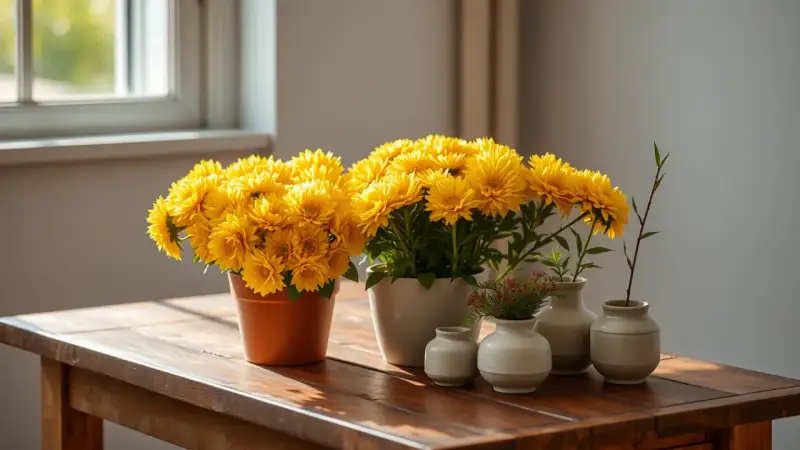
Chrysanthemums, with their gold or purple blooms, are said to symbolise longevity, and those with gold blooms stand for wealth and prosperity. They are among the most traditional plants to bring home for the festival, which falls on 6–7 February 2027 in Singapore.
A 2016 guide to the season’s plants listed 13 choices, from classics to quirky novelties. The symbolism holds up; the shops and prices belong to that year.
How to choose a good plant
The 2016 advice still reads sensibly. For flowering plants, ask how long they take to bloom. The nearer the first day of the festival, the more you should favour plants with partly opened flowers, so the blooms peak on time.
Anyone without a green thumb was steered towards hardier plants such as kumquats, which need minimal care. Citrus such as four seasons lime and dragon lime should have firm fruit, never soft or squishy.
Check the plant’s health too. The stalk should be upright and the flowers should not droop. Look for lush foliage and blooms, with no brown bits along the edges of leaves or petals. Another Singapore home guide also advises choosing plants in person.
The traditional choices
Chrysanthemums. Besides longevity, gold blooms signify wealth. The 2016 guide advised keeping them in shade and watering until water ran from the pot’s base, while avoiding the fragile flowers themselves.
Kalanchoes. Known in Mandarin as wan zi qian hong, meaning thousands of reds and purples, they are easy to grow and associated with wealth. They like indirect light and a weekly watering. Soggy soil rots the roots.
Jade plant. Also called crassula, it is a South African native with emerald leaves shaped like jade stones, and it symbolises prosperity. It needs little moisture and a semi-shaded spot.
Pussy willow. The furry buds mark the start of spring. In a vase, the water needs changing twice a week, which keeps the stems fresh and stops mosquitoes breeding. In Singapore’s heat, new shoots after flowering are hard to coax.
Phalaenopsis. Called hu die lan, or butterfly orchid, its petals resemble wings and stand for happiness, spring, vitality and longevity. The 2016 guide warned that overwatering makes the flowers turn translucent or discoloured, and recommended a shaded, cooler spot.
Lucky bamboo. Twisted into shapes such as the number eight, it is a symbol of strength. The number of stalks carries meaning: two for love, seven for good health. It needs only fresh, clean water, anchored with pebbles, changed every seven to 10 days.
Quirky picks from 2016
That year was the Year of the Monkey, and retailers went playful. Far East Flora sold limited-edition gold table gardens with monkey figurines, from S$98 a pot in January 2016. They mixed fittonias with zamioculcas, known as the Gold Coin plant.
Cherry blossom bonsai started from S$48 at Candy Floriculture and S$68 at Far East Flora. Their pink flowers grow in clusters.
Oncidium orchids, priced from S$28 to S$88, have tiny yellow petals that look like gold coins. Another Singapore magazine describes them as Dancing Ladies.
Tithonia grandiflora, which has orange daisy-like flowers, was grown locally. World Farm said it had sold all 100 pots the previous year and brought in 500 pots, priced from S$18 to S$38.
Red cymbidiums, called hong pao (red cracker), and yellow ones, called huang jing (yellow gold), began at S$98 a pot at Far East Flora.
Nepenthes, the pitcher plant, is known as Monkey Cups. Its pitchers are likened to money bags, or qian dai, and the more pitchers a plant has, the more fortune it is said to bring. Nyee Phoe Group sold a monkey-shaped pot planted with pussy willows or phalaenopsis for S$68.
Where the symbolism stands now
The same plants dominate Singapore’s festive lists for 2027. Kumquats, and four seasons lime, are described as symbols of wealth and abundance, and orchids as signs of abundance and refinement. Pitcher plants are still described as lucky because their pitchers look like money bags. Home and garden retailers recommend orchids, bamboo and money plants alongside them.
One florist guide for 2027 notes that yellow, gold, red and pink chrysanthemums make festive arrangements, and cautions against all-white bouquets, which can carry mourning associations in some Chinese contexts.
Prices, stock and shop addresses from 2016 are history. Check with a nursery before heading out.