
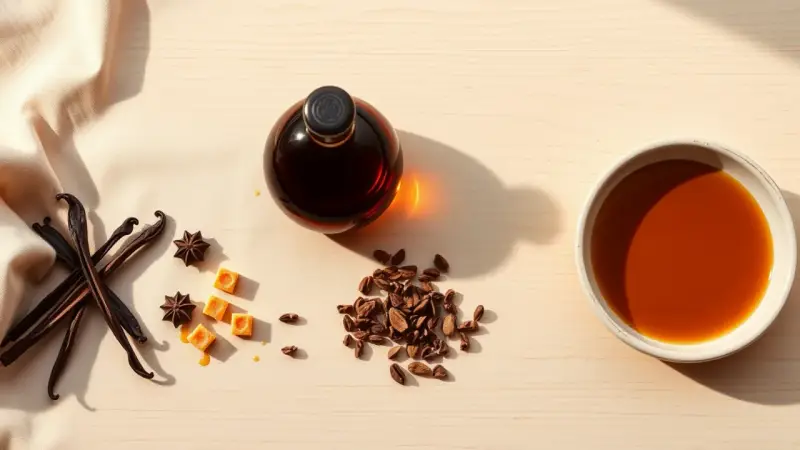
A gourmand is a perfume consisting primarily of synthetic edible notes, such as honey, chocolate, vanilla or candy. The French word gourmand means “one who loves food,” and today the family runs from heavy dessert scents to light, airy versions you can wear any time of year.
Several of the season’s new beauty releases lean on food notes. One example is a matcha latte eau de parfum, which shows that matcha has officially made its way into another beauty category. Gourmand body butter sets are also showing up among November 2026 fashion and beauty launches. The idea itself is more than 30 years old.
Where Gourmand Perfume Came From
- 1915: The couturier Paul Poiret released Le Fruit Défendu, a buttery peach candy. It caused a scandal and did not sell.
- 1992: Thierry Mugler’s Angel, launched in 1992, is credited as the first modern gourmand scent. Perfumer Olivier Cresp built it on praline and vanilla, along with an unusually high concentration of 30% of woodsy patchouli, added to keep the fragrance from becoming overly sweet. It came in a bottle shaped like an irregularly shaped star.
- 1998: Dior’s Hypnotic Poison used almond, vanilla and musk for a softer, more wearable gourmand approach.
- 2014: YSL’s Black Opium combined coffee, vanilla and white flowers and brought gourmand notes to a younger audience.
- December 2025: Looking ahead to 2026, Pinterest named gummy-inspired beauty products and increasingly bespoke scents as two areas it expected to grow.
- November 2026: New launches include a matcha latte eau de parfum and gourmand body butter sets.
Angel’s shock had less to do with how sweet it was than with scale. For the first time in perfume history, gourmandise was no longer a facet but a theme in its own right. Before 1992, ethyl maltol, a molecule with a characteristic smell of caramel and cotton candy, was only used for food flavourings. Angel has gone on to become one of the bestselling fragrances in the world.
How to Try Gourmand Perfume
These three approaches run from easiest to boldest.
- Easy: start on the body, not with a perfume. A gourmand body butter or lotion gives a soft edible note that stays close to the skin. Body products from this family are not intended for human consumption, even when they smell like dessert.
- Middle: a light or modern gourmand. Today’s options include light, airy compositions that work just as well in summer as they do in winter. A tea-based or almond-vanilla scent is a gentler step than chocolate or caramel. Layering is another route: trend forecasters have named tactile beauty and fragrance layering as major trends among Gen Z.
- Bold: the classic dessert gourmand. Go for the original style of chocolate, caramel and patchouli. Angel is the model here, and it remains bold and polarising more than three decades after its launch.
Cost and Upkeep
This is an at-home trend. No salon visit or special tools are needed, and the main cost is choosing the right bottle. The usual advice is to start small and to sample affordably before buying a full size. Testing on skin over a full day shows how the sweet notes change as the scent wears down.
Upkeep comes down to how strong you like it. A body product is a lighter, low-commitment way to get the scent. A dense dessert perfume needs a lighter hand when you apply it, because the sweetness is the point. Patchouli and other woody notes are what keep many gourmands from tipping into pure sugar, as Angel’s makers showed with its heavy patchouli dose.
Who It Suits, and Who Might Skip It
Gourmands suit people who like warm, sweet and comforting scents and want something that reads cozy in colder months. Light versions also suit people who wear one fragrance year-round, since some newer gourmands work just as well in summer as in winter. Fans of layering can use a single gourmand note, such as vanilla, as a base under other scents.
People who find sweet scents overwhelming may want to skip the bold dessert style, or stick to a body product. Anyone who avoids scented products altogether is in good company: fragrance free is one of the fastest-rising skincare searches in November 2026. If you choose fragrance-free products for a skin condition, ask a dermatologist or other clinician before adding any scented product.
The Ledger Verdict: Keeper
- It has lasted for decades. The gourmand trend has steadily increased in popularity since 1992, and Angel itself became a global bestseller.
- It keeps renewing itself. The family has moved from praline and patchouli to almond, coffee and now matcha. Each new note brings in a new audience without replacing the old ones.
- It is not tied to one season. Gourmand launches cluster around the holidays, but lighter modern versions are made to be worn in summer too. That flexibility is what separates a keeper from a seasonal trend.
FAQ
– What makes a perfume a gourmand?
Edible-smelling notes are the main theme rather than a passing accent. Typical notes include vanilla, caramel, chocolate, honey, almond, pistachio, coffee, and fruits. A perfume that only turns slightly sweet as it wears down does not count.
– Was Angel really the first gourmand?
Angel is credited as the first modern gourmand. Earlier attempts existed, though, including Paul Poiret’s peach-candy perfume from 1915, which failed. Angel was the one that turned sweetness into a full perfume family.
Sources
- Gourmand (fragrance) — en.wikipedia.org
- Mugler – The Perfume Society — perfumesociety.org
- Gourmand fragrances: definition, history and tasting tips — theperfumesampler.com