
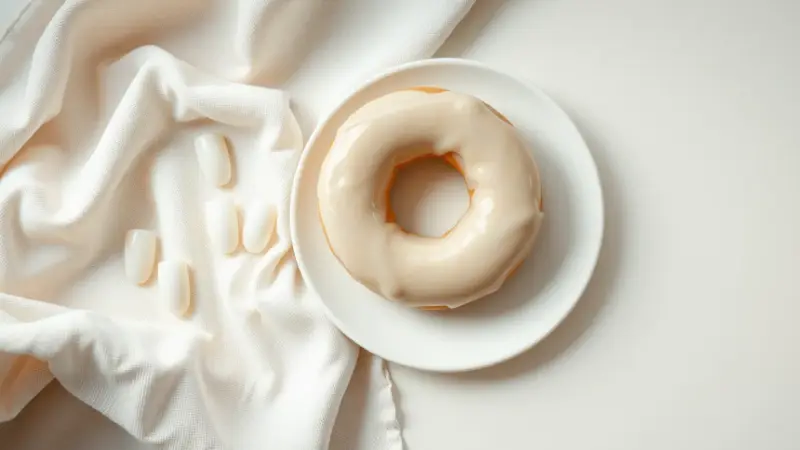
What it is: Glazed donut nails are a sheer, iridescent, milky white look. The effect comes from gel nail polish and chrome dust buffed over a pale base, so the nail shines the way sugar glaze does on a doughnut.
The look is named after a pastry, and it is still on salon menus more than four years after it started. Earlier issues of this series covered velvet, jelly and red manicures. This one covers the pearly finish that helped make chrome powder a regular nail tool.
Where Glazed Donut Nails Came From
The name grew out of an earlier beauty phrase. The trend began on a single red carpet and spread through social video.
- 2021: Hailey Bieber made “glazed donut skin” go viral after introducing the concept in 2021, which gave the term its start.
- May 2022: Los Angeles nail artist Zola Ganzorigt did Bieber’s nails for the 2022 Met Gala. They were meant as a matching accompaniment to the media personality’s creamy white Saint Laurent gown and as a nod to the glazed-skin idea. Ganzorigt has said the manicure was an on-a-whim idea.
- Later in 2022: Ganzorigt explained her method on TikTok. She used a gel base, a gel color and a top coat, finished off with a dusting of chrome powder. The look then spread across TikTok, Instagram and other platforms. Speaking about the manicure at the time, Ganzorigt said, “Since it’s really neutral, minimalist and chic, I can definitely see that these nails will be around.”
- The following years: The original milky version branched into other shades and levels of sheerness. These included a sheer pink “strawberry” glaze, a chocolate version, and orange, citrus and neon green finishes.
- 2026: Glazed nails still appeared among the 2026 nail designs fashion editors were recommending. Ganzorigt also worked with a professional nail brand on four new chrome powders designed to go over gel polish.
How to Try It: Three Variations
1. Easy: Chrome Over Regular Polish
You can get a softer version of the glaze without a lamp. Chrome powder normally needs a cured gel surface to reach a mirror finish. With regular polish, wait until the polish is about 90% dry and still tacky. Then pat the powder on with a fingertip and seal it with a water-based clear top coat. Avoid solvent-based top coats, because they dissolve the chrome’s shine.
2. Classic: The Original Gel Glaze
This is the version Ganzorigt made popular, and it needs a gel lamp.
- Push back the cuticles, buff the nail lightly, clean off the dust, then apply a gel base coat and cure it.
- Apply a sheer milky white or pale pink gel color and cure it. One tutorial cures each color coat for 60 seconds.
- Apply a thin no-wipe top coat and cure it until the surface feels glassy and smooth.
- Let the nail cool for 10 to 15 seconds. Then buff a small amount of pearl chrome powder over it in light circles, using a silicone tool or a sponge applicator.
- Brush off any loose powder, then seal with another layer of gel top coat and cure it.
Use very little powder. If the finish looks patchy, add a little more powder or keep buffing.
3. Bold: Color, Layers and Nail Art
Once the method feels familiar, change the base or the powder. “Double glazed” nails use two layers of chrome powder in different shades to add depth. The glaze also appears on French tips and aura designs, and some manicurists put a different chrome color on each nail. Celebrity manicurist Julie Kandalec put the appeal simply: “A pearly shimmer over a neutral base instantly makes even the simplest manicure feel special.”
Cost and Upkeep
Salon or home: At a salon, ask for a sheer neutral gel with pearl chrome powder rubbed over the top. At home, the classic version needs gel products, a curing lamp, a no-wipe top coat, chrome powder and an applicator. Some professional chrome powders are labeled for professional use only, although they can still be found online.
Time: The gel method has several steps, and each base, color and top layer is cured separately. The polish-only method is quicker, but you have to wait for the polish to reach the tacky stage before adding the powder.
Keeping it intact: Chrome chips if it is not properly sealed, and two layers of top coat help it last longer. The tips are the weak point. Chrome powder tends to keep the top coat from sticking at the free edge, which can make the tips peel. Capping the edge with top coat helps prevent this.
Who It Suits, and Who Might Skip It
The classic glaze sits on a sheer neutral, so it goes with almost any outfit and works in any season. Almond and coffin shapes are often suggested, but the finish works on most nail lengths. Chrome also works over acrylic extensions if the acrylic is filed smooth and sealed with a no-wipe gel top coat first.
Skip it, or plan for extra prep, if your nails have ridges or uneven texture. Chrome highlights every bump and ridge underneath it. People who don’t want to buy or use a curing lamp at home get a softer result with regular polish. Anyone who wants strong, opaque color may find the original milky version too subtle.
The Ledger Verdict: Keeper
- It has lasted. The look started at the May 2022 Met Gala and was still among recommended nail designs in 2026.
- The method works with many looks. Glazed nails are made by buffing a powder over a base, so the same steps work with pink, chocolate, citrus, layered or nail-art versions. That has kept the trend going after the original milky white.
- Its creator calls chrome a standard technique now. Ganzorigt has said chrome grew from a trend into a staple of nail artistry. The 2026 powder collection she worked on is built around that idea.
FAQ
– Do I need gel polish for glazed donut nails?
Not strictly. The classic mirror-like glaze needs a cured no-wipe gel surface. Regular polish can still hold the powder if you apply it while the polish is tacky and seal it with a water-based top coat.
– Why do glazed nails peel at the tips?
Chrome powder keeps the top coat from bonding well at the free edge. Sealing carefully, using two top coat layers and capping the tip all help.