
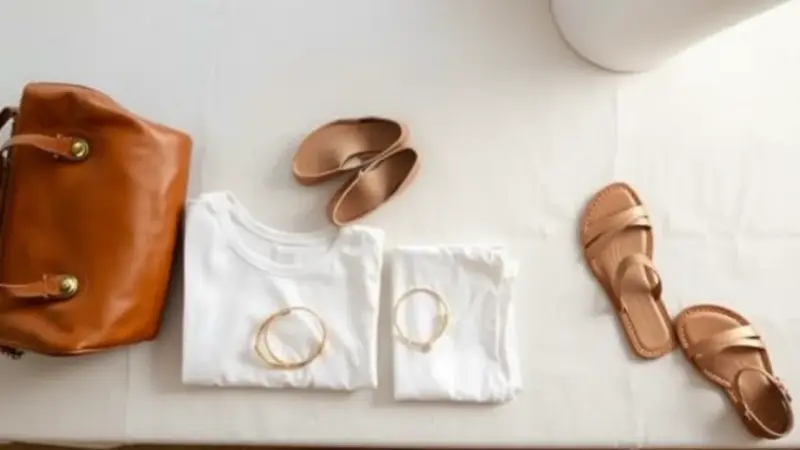
A designer bag spotted on a shopping site can quickly turn into a plan to skip the morning coffee, cut back on meals or put the bag on a credit card instalment plan. Then something new catches the eye and the cycle starts again. The way out is a simple rule: splurge where it counts and save where it doesn’t.
In short: save on frequent basics, costume jewellery and flat sandals. Spend on handbags, lingerie and shoes. Before each purchase, work out the cost per wear to check which group a piece belongs in.
Step one: work out the cost per wear
Cost per wear is the price of a piece divided by the number of times you realistically expect to wear it. The more often you wear something, the lower that figure gets. A sweater bought for $100 and worn 50 times works out to $2 a wear. A $30 sweater worn twice costs $15 a wear, so the cheaper one ends up costing more.
Forecast honestly. A piece worn twice a week comes to about 104 wears a year (2 x 52 weeks). Add upkeep too: a $600 dress with $180 of dry cleaning, worn 36 times, comes to about $21.67 a wear. That beats a $60 dress worn twice, which costs $30 a wear. Climate matters as well, because a cashmere coat is a poor buy somewhere warm.
Step two: save on these
Frequent basics
White shirts, black shorts and pencil skirts are the pieces worn to death. They take so much wear and washing that even a premium label won’t make them last much longer. The original advice was to buy these from high-street names such as H&M and Zara. The same rule now applies to anything that gets heavy laundering, like T-shirts and basic layering pieces.
Costume jewellery
Costume jewellery had already grown bigger and pricier, with prices running from a few dollars to several thousand. It is made with imitation pearls and stones, which don’t hold up well after moderate use. Jewellery trends also change quickly, and the warning at the time was against being stuck with a pile of out-of-date S$500 bracelets. Trend pieces in general have a high cost per wear because they last only a few seasons.
Flat sandals
Flat sandals are the weekend fallback, and affordable pairs in good leather are easy to find. The original advice saw no point in paying around S$1,000 for a few thin leather straps. The more affordable labels it suggested were Windsor Smith, Ancient Greek Sandals and Sam Edelman.
Step three: spend on these
Handbags
The right bag can lift a whole outfit, and a well-made European bag can last for years. Rather than chasing a new It bag every season, put your money into one or two classics. Look for a brand’s iconic shapes in solid colours, since prints and flashy designs show which season they came from. Buy one only if you truly love it, not because it is on sale or everyone else has it.
Lingerie
Spending on what goes underneath can seem wasteful, but good lingerie is one of the most important buys. A well-built bra that fits properly smooths the silhouette, so clothes hang better and you feel more confident in them. It also means fewer days of hating everything in the wardrobe and wanting to replace it all. Carrying an expensive bag while wearing a poking underwire and worn-out lace gets the priorities backwards.
Shoes
For everyday ballet flats and plain work pumps, the original advice pointed to mid-range labels Stuart Weitzman, Tory Burch and Kurt Geiger for comfortable leather shoes. Shoes you wear three or more days a week fit the cost-per-wear case best. Stitched soles that can be replaced two or three times last longer than glued ones. If the budget allows, add one pair of statement heels that can be worn again and again to events.
Tips and variations
Inspect construction before paying a premium. Check that seams are straight and reinforced at stress points, that buttons are sewn on firmly, that the lining is smooth and complete, and that zips run cleanly. Judge each item on its construction, materials and cost per wear, not on the brand name.
Be careful with “investment” claims. Logo-heavy pieces, novelty hardware and very specific shapes such as micro-mini bags can look dated within two or three years. Evening dresses worn for one occasion rarely earn their price through wear. Judge a markdown by what you actually pay: a $300 jacket reduced to $180 doesn’t save you $120, it costs you $180.
Secondhand works best for the splurge list. Well-made shoes and bags can be repaired, so pre-owned pieces are a safer buy there. Check the sole stitching, the lining and the leather at the bends before buying.
Keep a record of wears. At a yearly review, work out the cost per wear for each piece. Then spend more in the categories with low figures and less in those with high ones.