
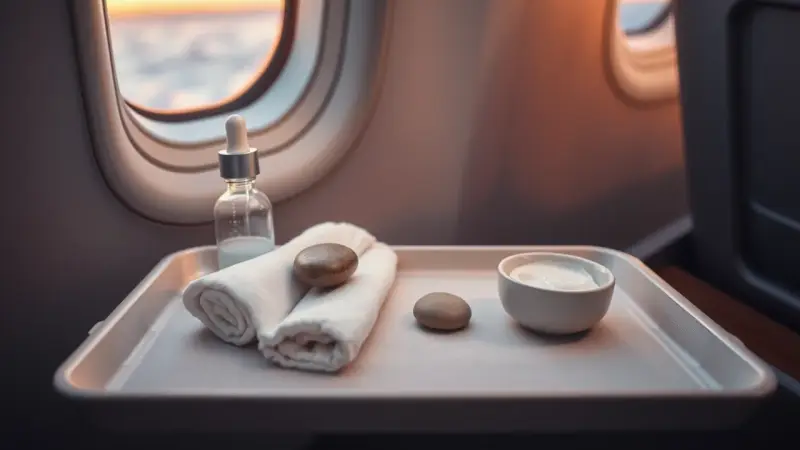
This in-flight beauty routine has three steps, timed to the shape of a long-haul flight, so you wake up and get off the plane with skin that looks rested. Two steps happen soon after take-off. The third starts about 20 minutes before landing.
The timing is built around the cabin air. Humidity inside an aircraft often falls below 20%, while skin is most comfortable at around 40 to 70%. Dry air speeds up transepidermal water loss, which leaves skin tight, flaky and dull.
Step one: take it all off after take-off
On a red-eye or any long-haul flight, the routine starts with removing makeup using a wet wipe once the plane is in the air. Next, pat a nourishing, oil-based cream onto clean skin to form a protective layer against the dry cabin air. The original routine was firm about facial oils: one drop is enough for the whole face. If you want an extra layer, put your usual moisturiser on afterwards, then sit back with the in-flight entertainment.
Taking makeup off early has a practical benefit too. Foundation and powder cling to flaky patches in the cabin, and heavy foundation on drying skin can crack and settle into fine lines over a long flight. A clean face also lets moisture reach the skin directly. Speaking to Gulf News, New York dermatologist Ellen Marmur said that “lips always feel dry first”, which signals that it is time for more moisture. Keep a lip balm within reach, along with a hand cream.
Step two: massage your face
The second step boosts circulation with a quick face massage, using a silky serum so your hands glide. A silicone massage roller works if you have one, but bare hands are fine. Pump some serum into your palms, make loose fists and press your knuckles against your face. Glide them up from your chin towards your cheeks. To finish, sweep outwards from the sides of your nose along the smile lines, then press gently under the eyes to reduce puffiness.
If you feel shy about massaging your face in front of other passengers, you can do the same moves in the privacy of the plane’s toilet. The choice of serum matters as well. Speaking to Fashion Journal, a dermatologist identified as Dr Shreya recommended serums with hyaluronic acid or niacinamide, which draw in and hold moisture in the cabin. She also reapplies a light hydrating serum during the flight. Strong active ingredients and exfoliants are best saved for after you land, because skin is more sensitive in low humidity.
Step three: about 20 minutes before landing, mix foundation with serum
The last step happens about 20 minutes before landing. The aim is the barely-there, bare-skin look of a “morning after” scene on television. Swirl your sheerest liquid foundation together with your usual serum, roughly two parts foundation to one part serum. Mixing textures to get a custom, skin-toned finish is a standard trick among backstage makeup artists, and it takes only a minute in the seat.
The serum thins the foundation so it spreads lightly over skin that has spent hours in dry air. It also adds slip and moisture, so the base is less likely to cling to dry patches. Because the foundation is diluted, the coverage stays sheer and evens out tone without looking heavy under arrival-hall lighting.
Be careful with face mists along the way. Water sprayed on the face and left to evaporate in air of around 15% humidity can leave skin drier than before. Drinking water on board is good for general wellbeing, but the tight feeling on the surface of the skin comes mostly from moisture evaporating into the cabin. That is why sealing in moisture with an oil-based cream and serum works better for skin than sipping water alone. The dryness from a flight is temporary, and once you are back in normal humidity your usual routine can take over.