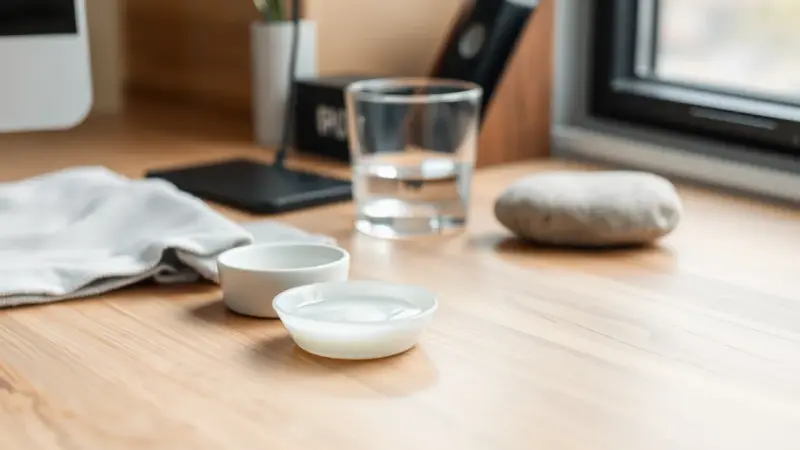
Hours under cool, dry office air can leave lips tight, flaky and unwilling to hold colour. Three small habits, which can be done at your desk, go a long way: a quick petroleum jelly mask, a layered lip balm routine that can finish with a tinted lip balm, and a few mindful changes in how you sip and fidget.
Lips have no oil glands, which makes their skin thin and sensitive to dry air, according to Nexstar’s report on chapped lips. Consistent moisturising is the usual remedy, and the American Academy of Dermatology (AAD) advises applying a non-irritating balm several times a day and before bed.
1. Give lips a quick desk mask
Start on bare lips and smooth on a generous layer of a thick balm or ointment. The AAD says that for very dry, cracked lips, a thick ointment such as white petroleum jelly is a good choice, because ointment seals in water longer than waxes or oils.
Leave it on for a few minutes, then blot gently with a soft, damp cloth. Be gentle. Rubbing hard at flakes can irritate lips further, and dermatologists generally advise against picking or biting peeling skin. A small pot kept in plain sight on the desk makes the habit easier to remember. The original advice also noted that any excess works as a quick treat for dry cuticles and hangnails.
2. Layer your lip balm
A lighter stick balm feels pleasant but can wear off quickly. Pressing a thin layer of a stickier, petrolatum-based product over it adds an occlusive seal. Occlusives such as petroleum jelly create a barrier to lock moisture in. They do not add water themselves, so apply them over a hydrated surface. Tissue off any excess before adding colour.
This is where a tinted lip balm earns its place. It lets you finish with a wash of colour without switching to a drying matte formula. Check the label before you buy:
- Look for: the AAD lists castor seed oil, dimethicone, mineral oil, petrolatum and shea butter among the ingredients that help lips heal, and suggests fragrance-free, hypoallergenic products.
- Be wary of: camphor, menthol and eucalyptus can irritate lips. The AAD also lists fragrance and strong flavourings such as cinnamon and peppermint.
- Listen to your lips: if a product makes your lips burn, sting or feel uncomfortable, it is irritating them, so stop using it.
Sun protection matters even indoors by a window and certainly on the commute. The AAD recommends a non-irritating balm with SPF 30 or higher before going outdoors, reapplied every two hours while outdoors.
3. Rethink how you sip
The original advice was to swap straws for a mug, on the theory that repeated pursing of the lips deepens fine lines and makes flakiness more obvious. No dermatology source consulted backs that claim, so treat it as a personal habit rather than a rule. A mug does keep an iced drink from becoming a reason to constantly touch your mouth, and it is an easy swap.
The bigger habit to break is licking. The AAD names frequently licking your lips as one reason lips become dry and chapped. Water on the lips evaporates fast and leaves them drier. The AAD also advises drinking plenty of water. Keep a bottle at your desk. If your office has a humidifier, the AAD recommends keeping the space hydrated with one.
When to see a doctor
Home care suits ordinary dryness. If dry lips last more than a few weeks, bleed or keep returning, seek medical advice, since persistent chapping can point to conditions such as cheilitis or thyroid disease. This article is general information, not personal medical advice.